LinkedIn's Predictive Audiences - yay or nay?

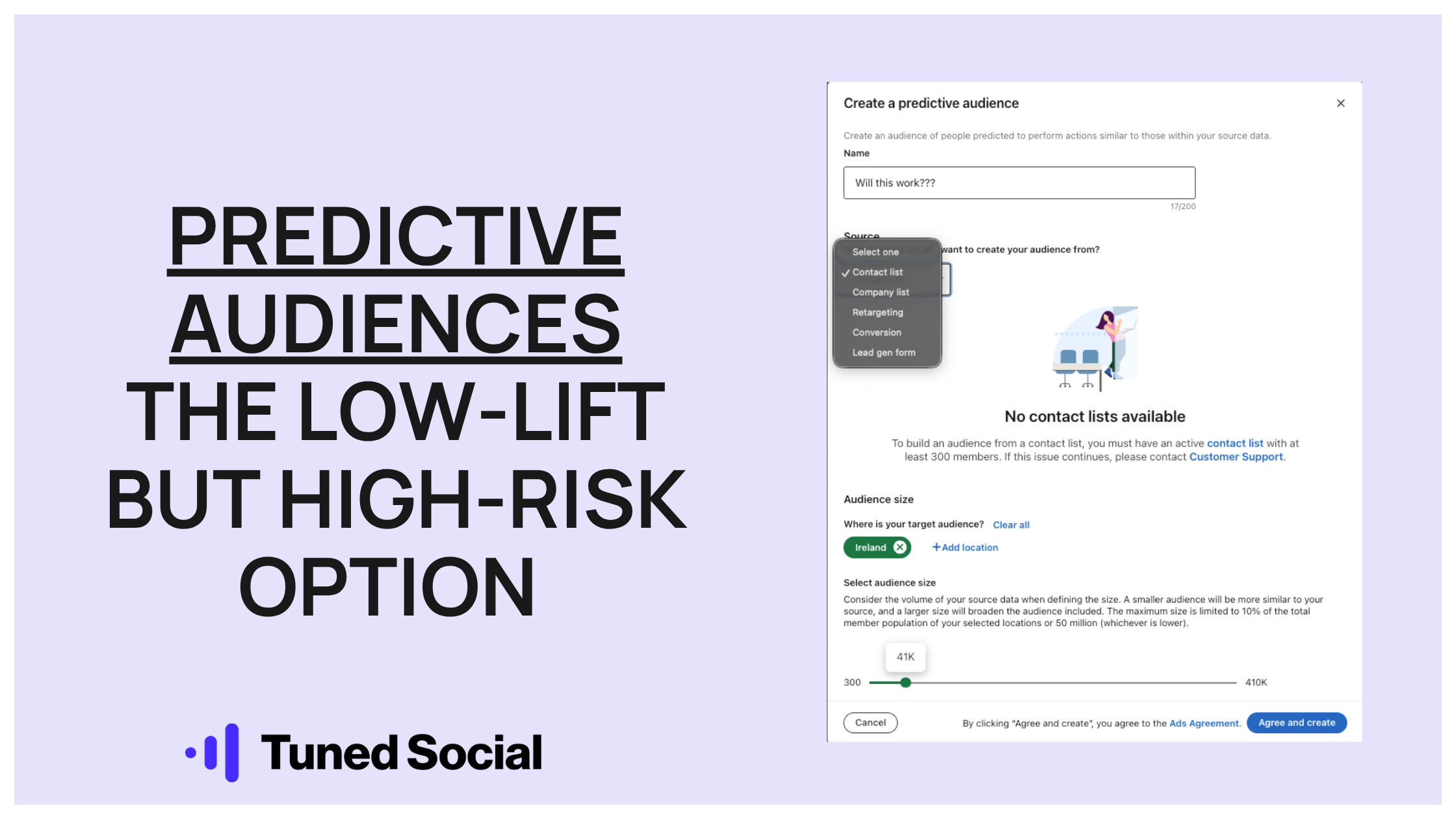
For years before Predictive Audiences, there was Lookalike audiences. Many advertisers had success with Lookalikes on Meta and assumed they would work the same way on LinkedIn.
But... they didn't.
Lookalikes worked better on Meta's with behavioural data points vs LinkedIn's with first-party data. On LinkedIn, lookalikes were burning millions in B2B budget on LinkedIn and were inevitably phased out.
Then, a couple of years ago, LinkedIn released Predictive Audiences - the rebranded, 'AI-driven', younger cousin of Lookalike audiences, with promises of better results and more accurate predictions of the audiences you're after.
The problem is, they work occasionally, but still largely miss the mark.
We've tested them across a few clients and found a couple of things:
Finding 1: Audience quality is still off
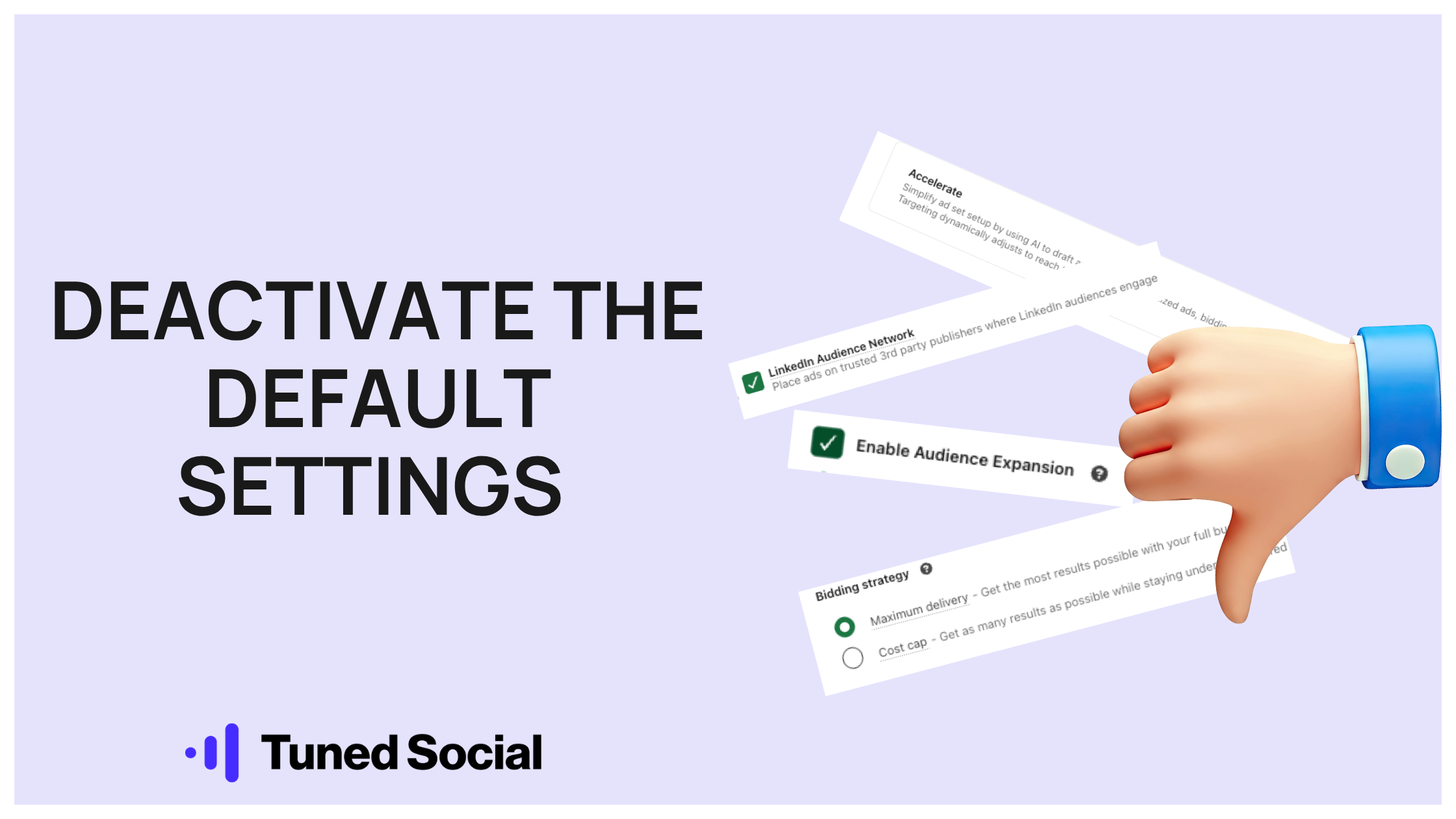
→ 1. The quality is better than audience expansion
→ 2. But still far worse than natively choosing your own filters
Finding 2: Costs are lower
→ 1. Bid costs are lower
→ 2. But at the expense of quality
Essentially, it's an easy way for time-poor marketers to test new audiences but - you will pay for it in your performance report.
--
𝐓𝐡𝐢𝐬 𝐢𝐬 𝐚 𝐜𝐥𝐚𝐬𝐬𝐢𝐜 𝐩𝐚𝐢𝐝 𝐦𝐞𝐝𝐢𝐚 𝐭𝐫𝐚𝐩 -- what seems like a minor choice at the time, amplified by budget - becomes a BIG mistake.
Regardless of the AI advancements, ad platform experts will always exist for this reason - to make better choices with your budget.
--
There are really only two situations where you should choose Predictive audiences over native targeting:
↳ 1. When you have no time (you should consider external help in this case)
↳ 2. You're looking to scale but don't know how (again.. outside help)
When we (Tuned Social) are scaling for clients, we still ignore Predictive Audiences and go a different, more calculated route.
First, we upload clients' customer data to LinkedIn in a contact list. Then using this data, we build out our own lookalikes based on the 'Generate Insights' option on the audience. (It's important to use a contact list, not a company list as you need the member data.)
By using the 'Generating insight' feature on a contact list, you can then see:
→ 1. Most common skills by key contact
→ 2. Most common interests by key contact
→ 3. Breakdown of Member Demographics
→ 4. Breakdown of Company Firmographics
Using this data, we build a broader native audience but we have control over the RELEVANT inputs and skills that can make up a new broader audience.
While more effort, broadening natively is far superior in terms of performance and accuracy than Predictive Audiences.
B2B in most cases is too much about precision to be left in the hands of the platforms.
LinkedIn requires the time investment to be precise.